Apple engineer Frank Fearon wrote: “We would … like to get an understanding of timing and availability for the space, and how we would need to coordinate around other parties who would be using [it].”
Sources sound credible – the military records. It will be harder for Apple to keep secrets with a device that drives around on streets, regardless of barbed wire. Detroit figured how to paint on camouflage but you still knew it was a car!
It’s important as we move forward that regulators be certain that unlicensed users would not compromise the integrity of this vital safety initiative. We think the FCC should adopt a “do-no-harm” position until thorough testing is completed and all parties are certain that the spectrum can be shared without interference with safety critical systems.
Importantly, auto manufacturers are moving forward with our supplier partners, Cisco and Denso, to test a potential technological solution that will allow DSRC communications without harmful interference from unlicensed devices.
If Cisco and Denso can prove that 5.9Ghz sharing will work, we may see some progress finally in deploying DSRC. The consumer segment that will gain from access to the spectrum using 802.11ac will pull things forward quickly so money can be made.
This LinkedIn group and topic is consistently the most interactive with commentary. Great discussion – see discussion using the direct link to “Self Driving Cars”
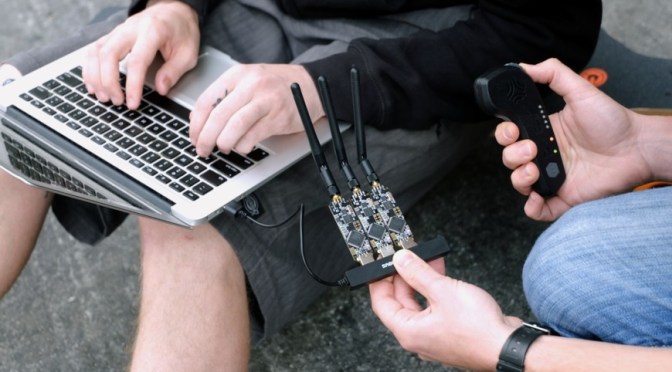
I never know they could go this fast, just 5 MPH behind a Google autocar. I guess the only good news about this hack is that the “driver” can jump off, like many skateboard folks do all the time.
I hope all this security exposing research comes up with a solution common to all “vehicles” including real ones.
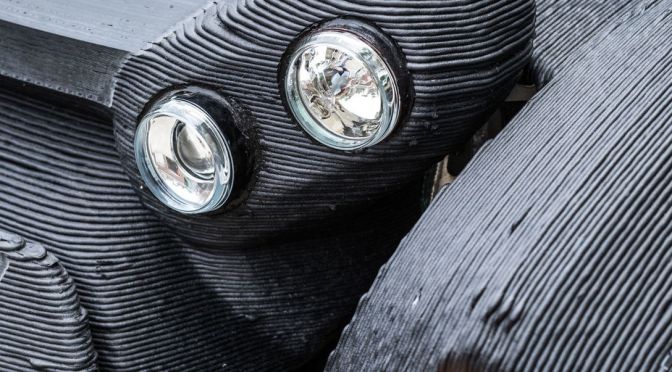
Local plans to build its own cars, but it could also end up working as a supplier for original-equipment manufacturers, some of whom have met with Rogers already. “One of them said, ‘This would be great for prototyping,’ ” Rogers says. “And I said, ‘Forget prototyping! This is how you make the car.’ ”
The “paint job” is a bit bumpy, but not making prototypes could save millions for cars that get crashed in NHTSA testing anyway. They used to print newspapers in central plants and ship them around, but the news was old by the time it arrived. Now they print on-the-spot. Imagine your dealership printing your car while you wait. 😉
You think, how is the automobile industry going to supply that nondifferentiated demand?
“That is a scary proposition. That’s where you have to worry about people like Apple and Google, because 90 percent of the content of the vehicle is going to be in the electronic systems and the connectivity and, of course, the battery. The module itself is going to be relatively trivial.”
You can have any vehicle module color you want, as long as it’s black.
Bob Lutz is famous for his car design leadership, his old job will be trivial in the future, but he can’t predict the date. Given that cars tend to stay around 10-20 years and still run, it will be difficult to imagine the coexistent model.
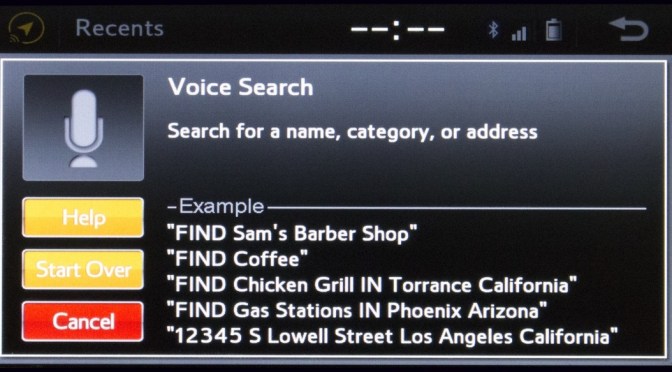
With this announcement is is clear that Toyota is making its best to keep away from Android Auto and CarPlay. It is also worth noticing that for the first time a leading auto maker is using data from Openstreetmap to power a turn-by-turn GPS navigation system.
This is pretty clear evidence that Toyota continues to favor open source models and software that allows them to maintain control of their customer relationship. Add this to the news around SDL also tied in with UI Evolution and you have some nice bookends around Linux in the future of the worlds largest automaker.







 Hoffmann Group Consulting, LLC