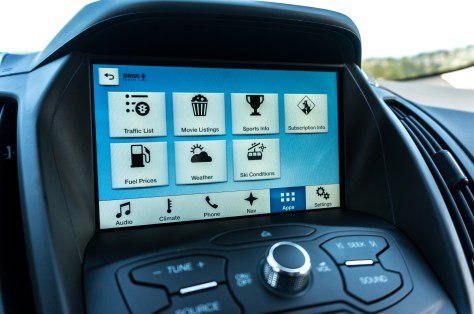
When Ford first open-sourced SmartDeviceLink, it donated the technology to the GENIVI Alliance. If you look at the GENIVI Alliance’s homepage today, though, you won’t find Ford or Toyota as members. “Previously, GENIVI may not have been the most neutral body in the world,” David Hatton, Ford’s global manager of mobile application, told me when I asked about what happened
“It was a surprisingly sober and realistic view of the challenges that autonomous vehicles face,’’ said Mike Dovorany, an analyst at The Carlab, a vehicle development consultancy in Orange, California. “I give them kudos.’’
Initially self-drive cars would be able to share the car share lanes, which are commonplace throughout North America. Given that the I-5 has a minimum of eight lanes and in some places has 10, this stage of the project could begin almost immediately. Gradually these lanes would be handed over completely to self-drive cars. The final, and most radical, proposals which would see human motorists banned completely could be introduced in 10 to 15 years time
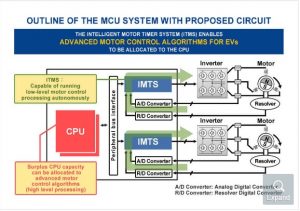
“This means that the entire CPU load previously required for the above processing is eliminated, and the CPU capacity freed up in this way can now be allocated to software containing advanced control algorithms designed to boost energy efficiency.”
System design with more dedicated hardware is the newest wave as shown also by the newest Apple MacBook Pro with touch bar totally running in silicon independent of the Intel CPU (wrapping ARM cores around X86 in the design).
But taxicab operators have reason to keep an eye on this emerging technology as a way to benefit their industry, said Tina Quigley, general manager of the Regional Transportation Commission of Southern Nevada. While there may be reason for concern, Quigley said that drivers-for-hire shouldn’t be scared of losing their jobs just yet. It will probably take about 20 to 30 years before fleets of autonomous vehicles take over Nevada’s roads, she said.
Ohio will be dedicating its I-90 corridor as a testing ground for self-driving vehicles. Its governor, John Kasich has recently announced that his upcoming budget will include its funding for the same purpose.
Conceived as an open laboratory for automotive customers, the Renesas development fleet enables the development of safe, integrated solutions that extend beyond silicon. The all-new, SAE Level 4 (http://www.sae.org/) autonomous vehicle, developed on a Lincoln MKZ car model, was realized through close collaboration between Renesas and its partners: AutonomouStuff, Cogent Embedded, PolySync, QNX, NewFoundry, eTrans, and University of Waterloo.
This development is one of few seen that actually focus on safety (via overlapping redundancy and fail-operational design) or the car, not just the concepts of self-driving.
Another approach is to propose a breakdown solution to guarantee functional safety in the number-cruncher part (Figure 5). Today, several technical and theoretical issues prevent this solution from being available in the near future.
Having a powerful number cruncher that is not safe sending commands to actuators that control your car does not make driving safer. I don’t think this is how self-flying airplanes work.
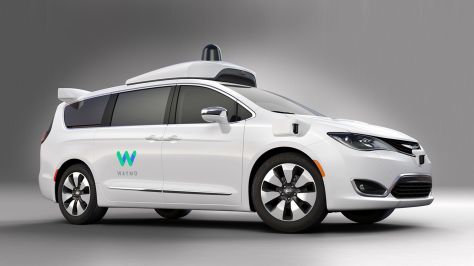
“That’s the best place for them,” Krafcik said at the Automotive News World Congress in Detroit, two days after his address at the auto show. “It doesn’t make sense to build a really safe car that has all of these driving capabilities and to not be putting them in the best place to optimize safety.”






 Hoffmann Group Consulting, LLC