it’s a matter of time until Apple substitutes its Mac Intel CPUs for its own, internal, SoCs. This is something I talked about in my article titled “Intel Should Worry A Lot If Apple Excludes It From Future Macs”, but which is now much more likely both due to architectural and process improvements. This event alone would represent the removal of 8% of the entire PC market from Intel’s hands. And it’s going to happen
Apple is a very important PC maker and probably the only one that really matters for the PC market since Windows is tired and tablets running Android have taken the rest of the consumer space.
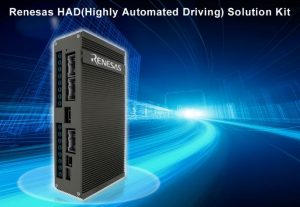
The HAD solution kit supports multiple interfaces, including five 100 megabit (MB) Ethernet Broad R-Reach ports, 1 gigabit (GB) Ethernet, controller area network (CAN) with CAN-FD and FlexRay
Add to this up to 16 camera inputs and the processing capacity to handle this automotive I/O and you bypass PC technology and gaming hardware completely with full ASIL B and D compliance. Now you can build drivable safer cars for production, not just research.
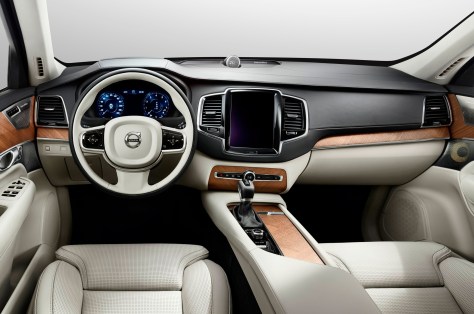
Wireless CarPlay was introduced by Apple along with iOS 9 in 2015, but till now there has been no in-car infotainment system that supports the function completely
2 years to get a new feature in a car is actually pretty quick given normal development times and implications to the entire OEM engineering and support systems. Others will follow quickly behind, and hopefully can adapt older models too.
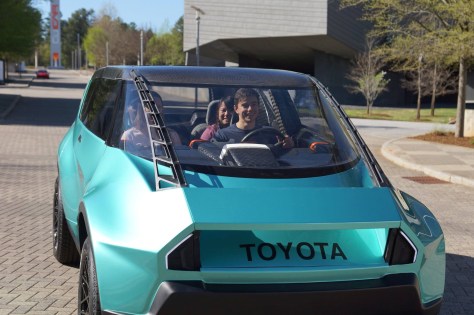
Toyota believes that since they have to follow the points in the checklist issued by NHTSA California while testing an autonomous vehicle, the innovation and speed of invention in the autonomous segment is being hampered
The relationship between industry and government intersects more intensely than ever when it comes to public safety, especially with automated driving systems.
ok, now this is something new, Google has always said you don’t need communications for a self-driving car. Now the Google business model may come out, since they practically own “the cloud”
That’s about 10 time the performance of Raspberry Pi2, sometimes being used to develop innovative code for auto. Now developers have an alternate that can move quickly into production cars and not overheat your seats. This gives X86 and nVidia level performance from a trusted automotive supplier focused on functional safety. That’s the only way to deliver an autonomous car or lead up to it.
Background noise? In a car? Even the most soundproof cars (which is not safe anyway) there are often a few other talkers in the back seat. Voice is not a safe interface for driving control to be sure.
The connected car and automated driving might require extremely low network latency in order to avoid nasty accidents, but again, it throws up all manner of practical problems
Here’s an issue about using wireless for safety. Cost and consistency are nearly impossible challenges for you to depend your life on any sort of wireless to the car, no matter how fast or how expensive.
$2B / yr is a strong incentive for Apple to assign engineering to introduce the A10 alongside the X86 part as a way to transition software over several years. The A10 only cost Apple the small IP payment to ARM vs $100 average per chip from Intel.







 Hoffmann Group Consulting, LLC