“Rapidly” is relative, in automotive years this means at least 5-10 because of legacy infrastructure inside the car and in the factory backend. Connected cars is not easy beyond infotainment.
But at the heart of the problem is an outdated connected car model that requires consumers to pay again for services they are already receiving on their smartphone at a much higher quality and ease of use.
“When you use smaller roads, you have problems with speed, traffic is congested, safety becomes an issue and there are also lower levels of engine efficiency.” In contrast he pointed out the better traffic flow and safety of modern highways.
It’s so much simpler than this, the automotive industry wants a universal network technology and with the internet (IP) inside and outside the car this will finally happen.
Clearly this revolution will involve a lot of automotive electronics and software innovation. GM has the scale to make a very big impact in the next 5 years.
This means that end-to-end latency can be cut dramatically, to 20 milliseconds and below. Without the new technology, transmission of signals between two vehicles via LTE networks and the central cloud can take a hundred milliseconds in the best-case scenario
Ok, yet another solution to a V2X problem documented 15 years ago, LTE can compete with DSRC? If US goes 802.11p and other GEOs go their own way, we’ll enjoy the same complexities of mobile phone homologation. No thanks.
As soon as we’re altered, our cars driver more conservatively (e.g. slowing down a bit or avoiding entering an intersection) until we have a better sense of where the sirens are coming from
Underlying technology for Ford Sync is called SDL and available to any automaker if desired since it’s published as Open Source. This demonstrates that even Apple can work in the open.
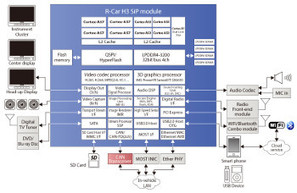
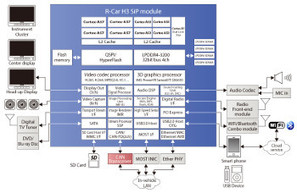
It’s not really just about performance since this chip contains key safety and security features supporting ASIL B internally which enables a Tier1 to comply to ISO26262 ASIL D. This will be the new benchmark for automotive SOCs.





 Hoffmann Group Consulting, LLC