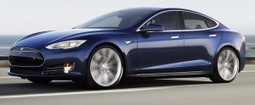
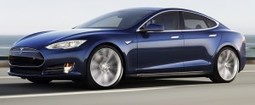
Autonomous driving (in limited conditions) for $2500? It shows what building in the future requirements can do for you. Tesla deserves a “star” for this accomplishment. All the tech is there for this level of safer and more convenient driving, it simply needs software and many customers will pay for that ($150M revenue to Tesla).
ST and Autotalks began co-developing their advanced chipset for V2X in 2014, combining resources to deliver a superior-performing solution within a short timeframe.
Suddenly the V2X market is getting hot, seem everyone is getting into the game. This is good, it has taken a decade to get here. We’ll see who the winners will be pretty soon.
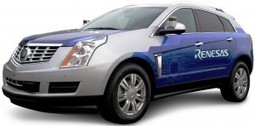
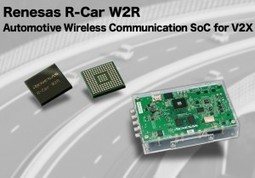
Renesas stands apart from others in this space as they already ship 720M production ECUs to the automotive industry and already deeply involved in functional safety and ISO 26262 ASIL D. Also by opening the vehicle and forward moving engineering, the industry can move much faster and key on software development and testing that is completely essential to get to highly automated driving and autonomous. Even the V2X technology is supported using Harbrick’s PolySync OS that fuses with all the other sensors in the car.
One option for making auto software safer is to open it to public scrutiny. While this might sound counterintuitive, some experts say that if automakers were forced to open up their source code, many interested people — including coding experts and academics — could search for bugs and vulnerabilities. Automakers, not surprisingly, have resisted this idea.
So much news and scary events lately may help automakers see the value of opening up. They’ve already accepted Open Source software via Linux in IVI, which can potentially be the most secure due to the many eyeballs on the code.
Obviously you car should always be in safe mode, and it will require additional security as well as ASIL tech to do so. Who will master that market? We won’t know for years.
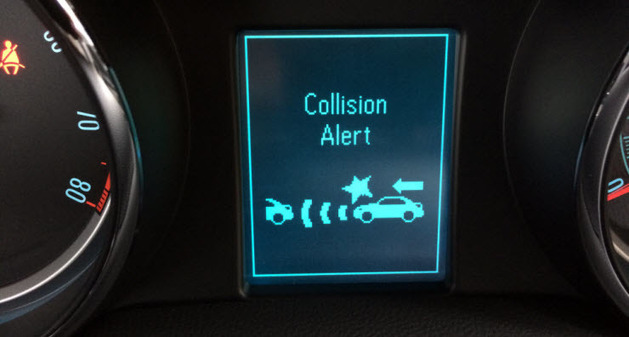
A survey by the University of Iowa Public Policy Center’s Transportation and Vehicle Safety program found car buyers are unaware of the latest safety tech.
Ideally they would not ever be aware of it until a near accident comes up. However, the consumer needs to know what they are paying for since early adopters will pay the most.
Concerns over government tracking of individuals, use of the data to monitor driving habits, and fears over malicious hackers triggering accidents have been a consideration since the first version of the IEEE 1609.2 security standard.
“We are left scratching our heads as to why the FCC still seems intent on excusing the behavior of T-Mobile and Sprint who have been offering these services without a waiver for quite some time,” said Jim Cicconi, senior executive vice president of external affairs at AT&T.
RSUs are 802.11p WLAN-based radio modules that reliably and securely transmit information such as speed limits, warnings of icy roads or other dangerous situations, traffic jams and construction warnings within a fraction of a second to passing vehicles and traffic control centers.
Here’s the chicken, now we need the egg. For at least a dozen years V2X has struggled to see who would go first, the roadside infrastructure or the carmakers. If the traffic lights are sending messages to equipped cars, we get immediate value from DSRC. Let’s go!






 Hoffmann Group Consulting, LLC