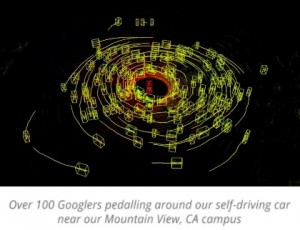
“We aim to give cyclists ample buffer room when we pass, and our cars won’t squeeze by when cyclists take the centre of the lane, even if there’s technically enough space.”
Bicycles and humans in general are the bane of self-driving cars.We riders are not so predictable and don’t always follow the laws and crossing markings.
Safety in cars boils down to data, and data requires communication to become information. A whole new generation of suppliers are coming to automotive from the Telecom space, with the discipline to match.
it will likely be the end of the decade before we really know how the car wars play themselves out. In the meantime, it’s going to be one of the most epic battlegrounds for both new world and old world businesses the market has seen in quite some time
What is missing from this excellent summary of the autonomous driving players is the critical Functional Safety element which will prevent any new player from joining the party until they have decades of proof points. No lawyer wants to take chances while technology is claiming to save lives, not lose more.
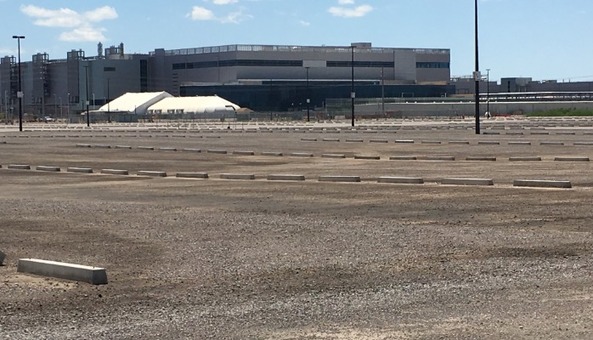
I ride my road bicycle past the potential future plant called Intel Fab OC42 nearly every week and am forced to recall Andy Grove’s criticism of irrational exuberance during the glory days of this manufacturing leader
The goal of the collaboration is to develop future-proofed solutions that enable the drivers to not only take their hands off the steering wheel, but reach the so called “eyes off” (level 3) and ultimately the “mind off” (level 4) level transforming the driver’s in-car time into leisure or work time. This level of autonomy would enable the vehicle, on a technical level, to achieve the final stage of traveling “driver off” (level 5) without a human driver inside
Clearly we expect some caveats to these claims, and 2021 is only about 12-18 months away from planning start so testing and validation is likely the biggest part of the project. No mention of a communications partner, but the project claims to be “open” and “standards”. We’ll see.
The trial was undertaken at Ericsson’s Stockholm, Sweden, headquarters on June 10, utilising 5G radio access prototype equipment using a 5G radio interface named New Radio (NR) alongside massive multiple-input multiple-output (MIMO). Massive MIMO combines a high number of antenna elements with beamforming for higher throughput, increased coverage, improved capacity, and more efficient usage of the mobile network
7Gbps might be enough to keep a high definition map streamed to a vehicle up to date enough to avoid a crash I might think. How many cars at a time can 5G deliver to? Tech is not the limiting factor, it will be economics and scalability that determine if autonomous cars will work on real roads.
What product designers face is a result of the confluence of a myriad intertwined engineering disciplines, product development processes and organizational cultures
Automotive is at the center of this complexity, particularly with Infotainment systems trying to meet so many different requirements at once. Is hiring more headcount the solution, or is using smarter methods and tools?
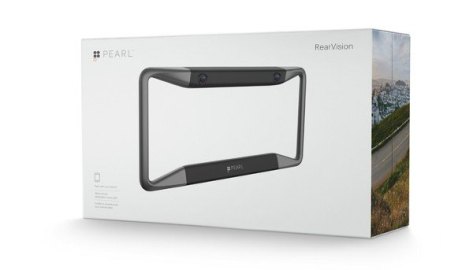
I will accept 10x since I don’t have a backup camera and can’t afford to buy a new car to get one. The aftermarket is really getting a big upgrade since the days of new rims and tires. Get on the pre-order list, Pearl is offering a very fair policy if you don’t like it.
Patrick Brady, lead engineer on Android Auto. With Android N, he says, that’s changed — Google is able to provide a “turn-key platform” for turning a car into a connected car.
You can’t imagine how many carmakers hate this, but everyone knows that Google has done a better job with the navigation experience that most people actually use in their cars. It seems they have a cockpit experience that gets rid of the silly tachometer too.






 Hoffmann Group Consulting, LLC