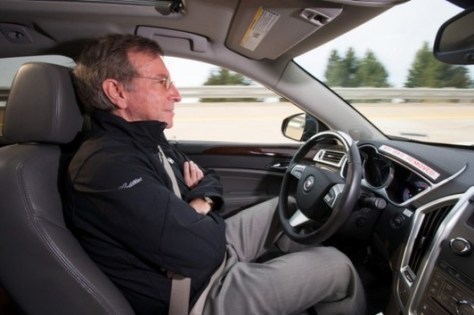
GM needs to be much more cautious on self-driving tech rollouts than companies like Tesla, due to their size and financial exposure. Regardless, driving while sleeping will always be a problem, so watching eyeballs is a good idea. A year ago this was not part of the design so GM is learning from early adopters.
Now that is an impressive Special Interest Group (SIG) at scale of 30K members! I can only imagine their All-Member Meetings, must need a sports stadium. This shows what ubiquity means in technology.
actual performance often fails to measure up in real-world situations. Even if computers have surpassed humans at certain tasks, the technology overall has made only baby steps
When I read “artificial” and “intelligence” in the same sentence I stand to attention. I think the human brain goes way beyond “baby steps” – if trained with anything close to the diligence of what these AI systems are being fed by massive supercomputers.
Bluetooth will gain market share at the expense of low data rate technologies, like Thread, ZigBee, and Z-Wave, and power hungry technologies like Wi-Fi
assume people will be tempted to take foolhardy risks when they activate the autonomous features in a car, making it imperative to design vehicles that minimise the chances of irresponsible behavior.
The article title was so painfully obvious, but the comment on foolhardy behaviour is a built-in feature for driving cars, even with human drivers at the wheel. Both a jab and a cheer to Tesla I’d say.
The Saab 9-5 in my driveway is showing great ageing and did not last the hundreds of thousands in miles I expected. Maybe we can blame GM for the increasing repair bills that exceed its value.
Quietly known to few consumers, ARM has a monopoly on the low cost designs for computing in “things” and cars. Thus they seem to be worth around 36x their revenues.
By eliminating their investment in mobile, how can companies like Intel succeed in IoT which is the same thing at an even lower price point?
aggressive roll-out of self-driving technology—in what it calls a “beta-test”—is forcing safety agencies and automakers to reassess the basic relationship between human drivers and their increasingly sophisticated cars
Silicon Valley (read: Google) frequently releases “beta” software to the public in the interest of advancing innovation. Tesla, the only substantial Silicon Valley carmaker follows that cue, with much higher risk taking than Detroit would accept.
I heard plenty of strategies, but execution of those strategies has been Intel’s biggest challenge for at least the past decade. Will a new batch of younger workers fix that? Have you seen the work ethic of many teenagers?
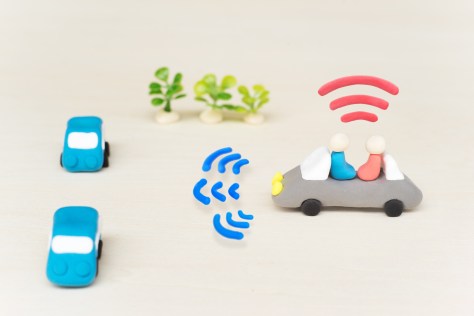
everything from ignition the car is in to things like the vehicle speed, the direction of travel, the GPS location, all of that information, which is used by the vehicle’s internal module to do everything from cruise control to turning your lights on and off
Very strange to me that this showcase on vehicle connectivity research does not include use of JLR’s RVI technology developed in Portland, OR. Perhaps the use of open source software is not the intention in the UK HQ.






 Hoffmann Group Consulting, LLC