Open source means more things than just free software, and, in the case of cars, we’re talking about collaborative platforms and diverse communities combining to design vehicles (or things for vehicles) more quickly and efficiently than the status quo.
Local Motors is pushing the envelope here with printed cars, but Open Source is already going into many production cars via Linux and community efforts such as GENIVI and AGL.
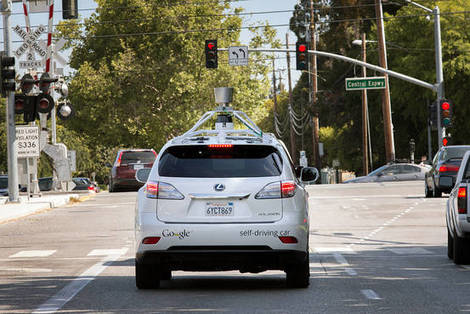
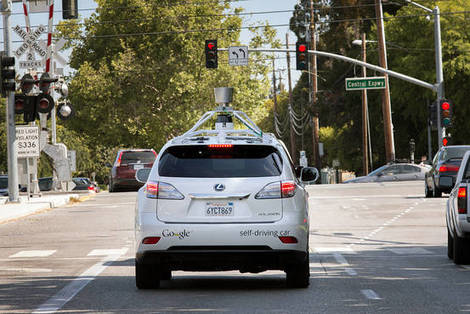
Despite what Musk and other futurists and technophiles say, both inside the automotive industry and out, autonomous vehicles (also referred to as self-driving, robotic, or driverless vehicles) have some hurdles to clear.
I think the industry really understands the hurdles, but is willing to take them on because there is a lot of money to be made along the way, and that seems ok.
“That’s where the chief financial officer says to the chief information officer, ‘Get out of the way, buddy, if we don’t do this, we’re going out of business.'”
One option for making auto software safer is to open it to public scrutiny. While this might sound counterintuitive, some experts say that if automakers were forced to open up their source code, many interested people — including coding experts and academics — could search for bugs and vulnerabilities. Automakers, not surprisingly, have resisted this idea.
Not such a bad idea, and at least 10 automakers are involved in open source code for the biggest section of code in the car, infotainment. Will open source methods apply in safety critical parts that drive the car? We shall see in the next few years who can lead that race.
If a hacker were to bring in a malware-harboring car for service, the vehicle could spread that infection to a dealership’s testing equipment, which in turn would spread the malware to every vehicle the dealership services
Here’s a case were the car’s built-in software has to be protected by some “secure boot” process, otherwise the source of intrusion will be immaterial. It seems cars are so attractive to hack now, yet rarely any real cases have been reported. Get ready for a less convenient startup process for you car – for safety and security sake.
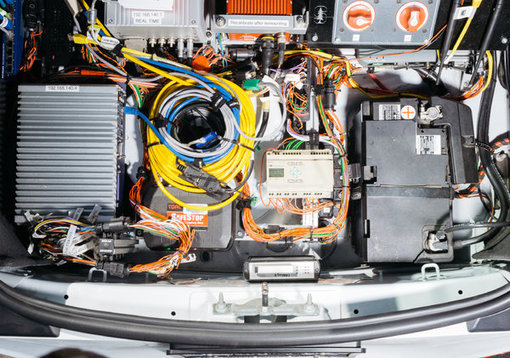
The kit is made of two parts: an on-board, car stereo-sized graphics processor packed with image-recognition software, and a larger server which sits at a carmaker’s autonomous car testing lab.
Great media coverage for NVIDIA, while never claiming to be part of Google’s research project, they have great marketing presence for such a small company in automotive. The question will be around whether graphics processing is the way to establish production self-driving systems. Heat may become an issue at scale.
Using technology embedded in its cars, she said, a customer who owns a Chevrolet Malibu could step into a Cadillac CTS and the luxury car could import from a smartphone app the driver’s preferences for how the car should function.
Sounds so simple to do, but with the massive silos in GM dividing interests, this will be a remarkable development and one that will really help get renters at Hertz to select the same brand of car they own at home!
Transmitting high-quality signals with very little interference makes it possible to incorporate V2X into various types of Advanced Driving Assistance System (ADAS) applications, such as forward collision warning and lane keep assistance. The R-Car W2R also conforms to the IEEE 802.11p communication standard
One nice side benefit with this package is that you can run infotainment on the companion processor and save money while planning for the future ADAS applications like V2X. How did Tesla offer OTA hards-free steering? They put the hardware in the car and activate advanced software later!
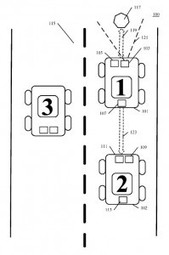
a vehicle would need a front-mounted camera and a radar transmitter with at least an antenna at the rear. When a safety problem is spotted, like an obstruction in the road, the system would begin recording and tag the clip with metadata, like size, distance, and whether or not the object is moving. All of that information would then be broadcast to other cars nearby.
Leave it to Google to find a simple solution using common parts to solve the blindspot problem. Now let’s see who can implement the concept and pay licenses to Google, perhaps they will open source the technology. Google wants to end distracted driving so phones in cars don’t become as illegal as open bottles, I think.
“If the first 10 carmakers do it, then it will become state-of-the-art safety for the industry,” Vivekanand said. “If there is an accident, plaintiffs will ask whether you applied state-of-the-art technology.”
The remaining automakers will fall in line fairly quickly, Vive-kanand predicted. “Once it’s out there, everybody has to do it,” he said. “Business will be good.”











 Hoffmann Group Consulting, LLC