In this case, it is more like Mobileye acquired Intel (automotive BU) which may offer a chance for success. Otherwise, Intel’s history of destroying 8 or of 10 of those acquired will likely result. Intel cannot succeed as a Tier1 supplier to automakers, but maybe Mobileye can.
“The Velarray enables not only fully autonomous vehicles, but also ADAS systems such as adaptive cruise control, while at the same time providing a miniature form factor and mass production target prices,” said Mike Jellen
Now let’s not forget design, software development, systems integration, validation and testing are just a few more steps before you get a fully autonomous vehicle. Also add a few other sensors and partners for silicon and manufacturing.
John Chen, Executive Chairman and CEO of BlackBerry. “We are pleased the arbitration panel ruled in our favor and look forward to collaborating with Qualcomm in security for ASICs and solutions for the automotive industry.”
It’s pretty amazing how a supplier like Qualcomm could have ever captured nearly $1B from Blackberry when their phones barely dented the market on shipments. Imagine how much cash flows from serious phone makers like Samsung who also buy QCOMM parts in massive volume. Does the automotive business prepare for this next?
What companies will bring new vehicles using electronics and software to make them safer? I would bet on suppliers with decades of experience, not newcomers, since the auto industry cannot produce failures that people die or get hurt in.
today’s consumers aren’t quite yet bought into the idea of self-driving cars. On one side of the spectrum, 17.6 percent are terrified by self-driving cars, while, on the other side, only 4.6 percent say they will be purchasing one as soon as they can
These numbers seem pretty unimpressive in both cases, but might grow with some good experiences of advanced driving systems saving lives, without as much hyperbole.
DynamIQ brings greater levels of responsiveness for ADAS solution and increased safety capabilities which will enable partners to build ASIL-D compliant systems for safe operation under failure conditions.
All systems will fail at some point, the key is to enable them to fail safely. A fine grained solution is more likely to be able to support a managed failure, which is critical in a car.
German carmaker BMW is on track to deliver a self-driving car by 2021, the company’s senior vice president for Autonomous Driving, Elmar Frickenstein, said recently.
He actually said “We are on the way… to deliver in 2021” and did not say when a driver would still be needed in the ultimate driving machine and on what roads you could remove the steering.
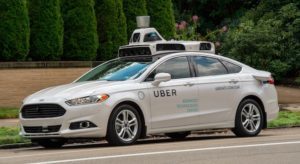
The report points out that over the six weeks beginning February 1, Uber’s fleet of 43 cars would make it an average of less than a mile before requiring some sort of driver action.
Auto Windscreens is the only glass repair and replacement company using the vehicle manufacturers to recalibrate its customer’s windscreens, working with over 4000 dealerships to ensure that it has access to all of the vehicle manufacturer’s latest technology.
This is another example of the complexity of supporting future vehicles if access to advanced technical information is not widely distributed to aftermarket repair shops, ADAS systems that are compromised could result in new accidents, who will be liable? The original OEM?
Standards-based vehicle software such as RVI, deployed across multiple vehicle brands, will make this new connectivity a reality and will strengthen the foundation for future autonomous vehicle deployments in cities.
The challenge is to motivate carmakers to alter their business processes around collaboration, then competition versus the other way around. Many proposals are out there once they decide there is a greater gain in working together.





 Hoffmann Group Consulting, LLC