
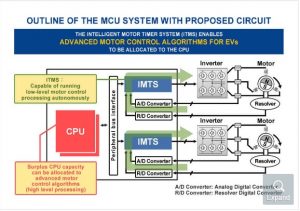
“This means that the entire CPU load previously required for the above processing is eliminated, and the CPU capacity freed up in this way can now be allocated to software containing advanced control algorithms designed to boost energy efficiency.”
“This means that the entire CPU load previously required for the above processing is eliminated, and the CPU capacity freed up in this way can now be allocated to software containing advanced control algorithms designed to boost energy efficiency.”

But taxicab operators have reason to keep an eye on this emerging technology as a way to benefit their industry, said Tina Quigley, general manager of the Regional Transportation Commission of Southern Nevada. While there may be reason for concern, Quigley said that drivers-for-hire shouldn’t be scared of losing their jobs just yet. It will probably take about 20 to 30 years before fleets of autonomous vehicles take over Nevada’s roads, she said.
Read the full article at: safecarnews.com

Ohio will be dedicating its I-90 corridor as a testing ground for self-driving vehicles. Its governor, John Kasich has recently announced that his upcoming budget will include its funding for the same purpose.
Read the full article at: telematicswire.net

Conceived as an open laboratory for automotive customers, the Renesas development fleet enables the development of safe, integrated solutions that extend beyond silicon. The all-new, SAE Level 4 (http://www.sae.org/) autonomous vehicle, developed on a Lincoln MKZ car model, was realized through close collaboration between Renesas and its partners: AutonomouStuff, Cogent Embedded, PolySync, QNX, NewFoundry, eTrans, and University of Waterloo.
Read the full article at: www.businesswire.com http://www.businesswire.com/news/home/20170104005341/en/Renesas-Electronics-America-Advances-Industry-Path-Autonomous-Driving/?feedref=JjAwJuNHiystnCoBq_hl-eNpqW21yaZ1R9EMQIRs3LFC-PaDxm2AxJabicA7iw7ievRMp3sIgu8q3wq1OF24lT93qbEzrwa15HGbLqMObxY5mIbhLClK_q0sSEy5DyJOA0H7eI6QGoOUR-_s0tB5Mw
This development is one of few seen that actually focus on safety (via overlapping redundancy and fail-operational design) or the car, not just the concepts of self-driving.

Another approach is to propose a breakdown solution to guarantee functional safety in the number-cruncher part (Figure 5). Today, several technical and theoretical issues prevent this solution from being available in the near future.
Read the full article at: embedded-computing.com
Having a powerful number cruncher that is not safe sending commands to actuators that control your car does not make driving safer. I don’t think this is how self-flying airplanes work.

“That’s the best place for them,” Krafcik said at the Automotive News World Congress in Detroit, two days after his address at the auto show. “It doesn’t make sense to build a really safe car that has all of these driving capabilities and to not be putting them in the best place to optimize safety.”
Read the full article at: www.autonews.com
Nobody will hit a self-driving car with that big ambulance light on top, plus it will be driving so slowly…
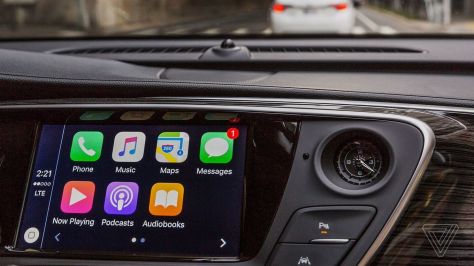
Ford and Toyota, which together founded a group called the SmartDeviceLink Consortium. The consortium will focus on developing and promoting the use of a technology called SmartDeviceLink, which you can think of in loose terms as an app store run by automakers and capable of running on any car.
Read the full article at: www.theverge.com http://www.theverge.com/2017/1/13/14268252/apple-carplay-google-android-auto-vs-carmakers
SDL should not be compared with Android Auto or Apple CarPlay but rather as another interface from the car to the consumer, as if they need one.

A tech company like Google or Uber can go for the moonshot, but automakers tend to be more conservative.
Read the full article at: www.wired.com
Many people thought we would live on the moon when they started the space mission program. Carmakers can’t afford that.

Today, even the most advanced cities are not prepared for autonomous vehicles.
Read the full article at: www.idgconnect.com
Infrastructure is everything. Roads, networks, policies are all part of it. Will convenience or safety tip the scale for the massive investment needed? Forget the cost of developing the technology, calculate the cost of deployment in the real world with real people.
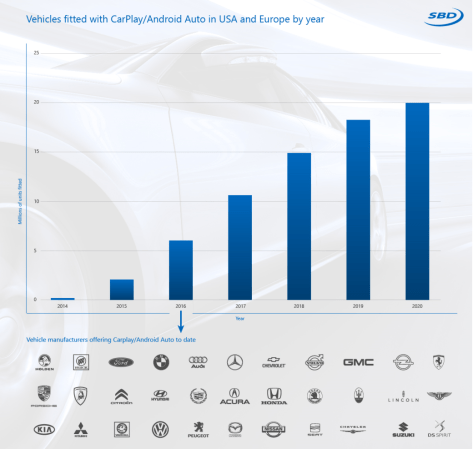
In fact, the only manufacturer today that doesn’t appear to be adopting either product is Toyota. SBD forecasts that by 2020 Android Auto and CarPlay will have a 60% penetration throughout USA and Europe.
Read the full article at: www.sbdautomotive.com
It may have something to do with the fact that the software actually works quite well, and cars are being sold briskly as a result of the co-branding with the largest companies in the world, Apple and Alphabet (Google).
 Hoffmann Group Consulting, LLC