Recently, Joe Speed of the IBM Connected Car Project reached out to get some help bootstrapping the latest 3-D printed concept car from Local Motors with connected features using Octoblu, Node-Red and IBM IoT for Automotive
Joe tried real hard to engage Intel automotive on this project, but despite their close proximity in Chandler, AZ they were not interested in this IoT. IBM certainly is though. Go Joe, full “Speed” ahead!
Hambrick evolves to Harbrick as it becomes more aware of the sensor fusion space needed for autonomous. Recently Renesas developed a full vehicle model released last week for development of those models. It does not take quite the central computing or the graphics analytics platform developed for Google by Roush as you might think.
Ghosn said that by 2020 Nissan plans to equip innovative autonomous drive technology on multiple vehicles. Progress is well on track to achieve this goal.
Please watch the video! Very interesting (no doubt expensive) concept AD/EV car shows how serious Nissan intents to activate on its promise. I really like how Nissan (and Toyota) refer to the car as a partner or helper, not just a slave to drive you around. Japan OEMs could lead the world here, and by 2020 will show off in Tokyo at the Olympics.
Nissan and Toyota Motor Corp., and the government are increasing efforts to put self-driving vehicles into practical use, possibly before the Tokyo Olympics and Paralympics in 2020
Apparently, unlike the US, autonomous driving is entirely permitted in Japan as long as manual controls are available. Trust and responsibility is highly regarding in Japan. Interesting to see logistics companies welcome autonomous due to shortage of driver labor.
This is for a Google-certified car operating system that would run directly on the car’s hardware—something that Toyota, GM, and other car manufacturers would ship from the factory
Covisint is showcasing the “Future of the Connected Owner” with the actual DeLorean DMC-12 from “Back to the Future II”. They show us around this iconic vehicle and discuss how auto makers are taking advantage of their technology to enable connected ownership and cloud-based capabilities in cars.
Over the next 5 years, DOT plans to provide up to $100 million through its Connected Vehicle pilot program for projects that will deploy V2I technologies in real-world settings
$100M may be a drop in a bucket the way these field test projects go and if the deployment challenges don’t get solved, there are competing approaches that might go to market quicker.
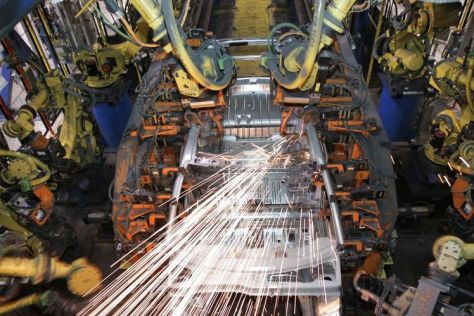
Anyone can make a car, but try making one every few minutes that people want to buy, and that allows you a profit without significant government support. There’s the challenge.
The car, via Android Auto (which does not mean Android in the car itself) is attractive to buyers of new cars. Using the conventional automotive model this modest innovation may take 12-18 months to reach the market. The next wave of car buyers will not be willing to wait, and may opt for car sharing, even Uber to get around.









 Hoffmann Group Consulting, LLC