The struggle to prevent snoozing-while-cruising has yielded a radical decision: Ford will venture to take the human out of the loop by removing the steering wheel, brake and gas pedals from its driverless cars debuting in 2021
A bold decision for sure, unless the cars are driving in a controlled (referred to as geofenced) area. Then the cars will be better off without override by a human. So far this has not worked in real life situations, like flying.
Why sell a car when you can sell it’s usage, this was the idea behind GMC leasing. I suppose the business model here is that Lyft still collects money for rides and the drivers (I think there are two) get some money from passengers. In the long run does it make sense?
This calls for not just a clearer understanding of how humans make such choices, but also a clearer understanding of how humans perceive machine intelligence making such choices.
This ends up looking silly, that machines are going to learn morals from people that choose to play a game. Morality is something that does not transfer by bits. https://youtu.be/XCO8ET66xE4
“OCF believes in technology partnerships that will help drive our vision of ensuring secure interoperability for consumers and business, across multiple industry verticals,” said Joonho Park, executive director of OCF.
What original equipment manufacturers (OEMs) are overlooking is that Silicon Valley might know how to develop technology solutions quickly, but sometimes at the expense of reliability.
Cars are proven to be much more capital intensive and complex to produce in volumes than phones and PC’s. Both industries can learn from each other with great respect for the challenges.
These acquihires led former Google Self-Driving Car Project lead Sebastian Thrun to comment that the going rate for self-driving talent is $10 million per person.
Please don’t tell me all this excitement about self-driving cars is based on a few bright souls making millions on their brains! Could the whole auto industry be fooled?
In fact, it’s a time-frame so firmly emblazoned on the minds of tech people, no reporter dares even question it. And yet, there is cursory evidence to suggest the real hurdle to fully autonomous vehicle penetration isn’t technical as much as it is social, economic and political.
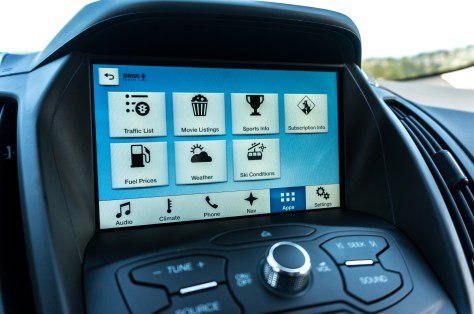
When Ford first open-sourced SmartDeviceLink, it donated the technology to the GENIVI Alliance. If you look at the GENIVI Alliance’s homepage today, though, you won’t find Ford or Toyota as members. “Previously, GENIVI may not have been the most neutral body in the world,” David Hatton, Ford’s global manager of mobile application, told me when I asked about what happened
“It was a surprisingly sober and realistic view of the challenges that autonomous vehicles face,’’ said Mike Dovorany, an analyst at The Carlab, a vehicle development consultancy in Orange, California. “I give them kudos.’’
Initially self-drive cars would be able to share the car share lanes, which are commonplace throughout North America. Given that the I-5 has a minimum of eight lanes and in some places has 10, this stage of the project could begin almost immediately. Gradually these lanes would be handed over completely to self-drive cars. The final, and most radical, proposals which would see human motorists banned completely could be introduced in 10 to 15 years time






 Hoffmann Group Consulting, LLC