in May 2015, NHTSA announced that it will move ahead of its public time table for its proposal to require vehicle-to-vehicle (V2V) communication devices in new vehicles and work to accelerate testing necessary to ensure that V2V and vehicle-to-infrastructure transmissions are free from radio interference.
I think it’s great that NHTSA and DOT realize that marketing plays a key role in accomplishing its goals to establish DSRC as the mandated standard for V2X, let’s get it going finally so the industry can respond.
New York City will install Vehicle to Vehicle (V2V) technology in up to 10,000 city-owned vehicles; including cars, buses, and limousines, that frequently travel in Midtown Manhattan, as well as Vehicle to Infrastructure (V2I) technology throughout Midtown. This includes upgrading traffic signals with V2I technology
This technology issues an audible and visual warning to alert the driver of an impending collision due to the presence of a hidden approaching vehicle during a left-turn maneuver. Automatic intervention is only triggered if the driver fails to observe the warning despite the increasing probability of an accident.
What if in the near future cars could look for their spaces in a parking garage and return all by themselves by using a smartphone app? This is the goal of a joint pilot project, started by Bosch, …
Clearly an automakers fantasy, but will it convince you to buy a new car that parks for you? Or will you wait for the next version that takes you back and forth to work by itself?
During the process the driver must watch out for any obstacles and bring the vehicle to a controlled stop if necessary. When the remote controlled parking system is to be activated, the vehicle must be positioned straight and centrically in front of the chosen parking space.
For the 7-series owners, this feature could pay for itself in savings of those pesky valet driver tips! I’ll bet they will be impressed and depressed at the same time when you pull up in your 740 sometime next year.
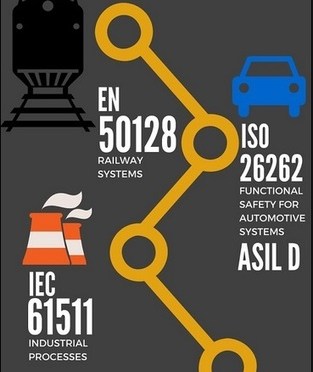
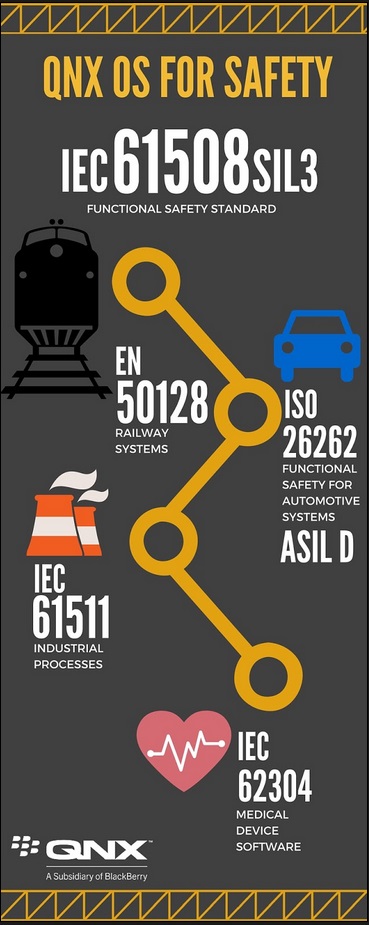
A great Infographic shows the relationship with railway, automotive, industrial and medical device safety systems as defined by the standards. QNX has a certified platform now.
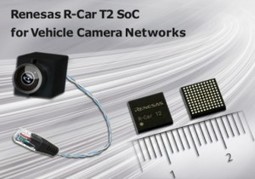
Renesas has succeeded in reducing the latency time to less than 1 msec, which is equivalent to a movement distance of 2.8 cm when driving at 100 km/h. This enables nearly real-time data transfer, allowing use in driver safety assist systems and making it possible to switch from the current LVDS system to Ethernet.
Continuing to push for a single network in the car, compression advancements not expected previously will make it possible. Just like the popular Internet, the car will run on standards including innovation.
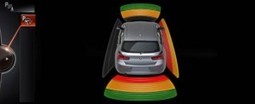
According to Continental Japan, no automatic emergency braking system capable of detecting objects located to the rear side has been commercialized. So, its system might become the world’s first such system.
Cameras are amazing when placed in a 3D surround view setting. This use case is quite salable in the US where parallel and tight space parking is not well understood by many.





 Hoffmann Group Consulting, LLC