This means that end-to-end latency can be cut dramatically, to 20 milliseconds and below. Without the new technology, transmission of signals between two vehicles via LTE networks and the central cloud can take a hundred milliseconds in the best-case scenario
Ok, yet another solution to a V2X problem documented 15 years ago, LTE can compete with DSRC? If US goes 802.11p and other GEOs go their own way, we’ll enjoy the same complexities of mobile phone homologation. No thanks.
As soon as we’re altered, our cars driver more conservatively (e.g. slowing down a bit or avoiding entering an intersection) until we have a better sense of where the sirens are coming from
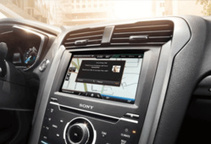
Underlying technology for Ford Sync is called SDL and available to any automaker if desired since it’s published as Open Source. This demonstrates that even Apple can work in the open.
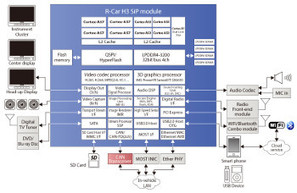
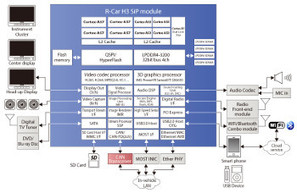
It’s not really just about performance since this chip contains key safety and security features supporting ASIL B internally which enables a Tier1 to comply to ISO26262 ASIL D. This will be the new benchmark for automotive SOCs.
It was only a short while ago that automakers seemed happy to get Pandora running on their dash, what happens when this becomes the next 8-track? Auto development cycles will never match CE.
Perhaps the most important feature is out-of-the-box ASIL-B compliance enabling applications way beyond infotainment and into more complex ADAS, sensor fusion and autonomous driving. Support already for QNX, Integrity and Linux will enable quick development using the base of software already created for R-Car.
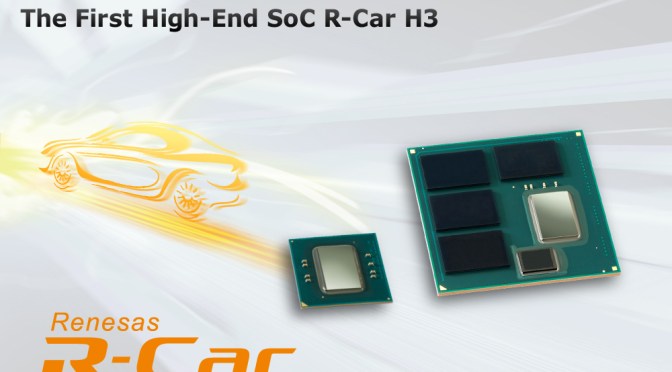
16nm technology speaks to the manufacturing team Renesas and its foundry have assembled to provide a sustained supply to the auto specific market (Renesas already shipping 887M MCUs per year to production cars). Incorporation of ARM A57/A53 cores is an impressing move to 64-bit along with key accelerators on die.
This part is not a promise, already shipping samples to customers and ready for SOP in 2019 car models. See it running at CES.
For how many years has telematics promised to pay for itself through passive advertising? This is more complex than it looks, I can see Google pulling it off and they will with Android Auto apps and phone, not the car itself.










 Hoffmann Group Consulting, LLC