The View from the Front Seat of the Google Self-Driving Car, Chapter 2 — Medium

‘Summer is one of the most dangerous times of the year on U.S. streets’


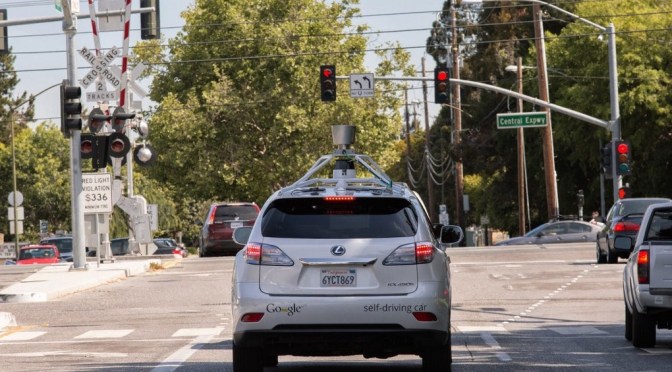
“The most recent collision, during the evening rush hour on July 1, is a perfect example. One of our Lexus vehicles was driving autonomously towards an intersection in Mountain View, CA. The light was green, but traffic was backed up on the far side, so three cars, including ours, braked and came to a stop so as not to get stuck in the middle of the intersection. After we’d stopped, a car slammed into the back of us at 17 mph — and it hadn’t braked at all.”

Source: medium.com

Google’s experience with the research vehicles confirms that safety features take time to deploy though the infrastructure. Even the safest self-driving cars will be affected by other cars on the road and aggressive or distracted drivers. Their cars can still be rear-ended, resulting in a ticket and maybe some injuries.

Zero fatalities is a great goal, but sort of unrealistic. Autonomous and V2X suffer from these same time to deployment issues. Then again, how long did it take for all of us to be dependent on the internet and its related technologies?

New Audi tech emergency swerve steering & CarPlay

“Automotive News reported that there is a new ADAS feature coming from Audi using the powerful zFAS system. The next phase of ADAS safety is that the car is programmed to automatically swerve around an obstacle to avoid collisions.

In order to accomplish such a complicated task, the technology used will have backup systems and sensors in place in case of problems. The new approach will use with the zFAS central controller when it goes into production in two years in the Audi A8.

The zFAS controller incorporates technology form Dephi, NVIDIA Tegra KI and Mobileye.”

Source: www.autoconnectedcar.com

From what I recall, the zFAS systems was to deliver autonomous driving. If swerving to avoid objects qualifies we may have a new definition. Perhaps the computing requirements were too high. Interesting that Apple CarPlay gets almost as much attention, although I doubt Audi will wait until 2018 to ship that feature.

Renesas releases ADAS Starter Kit

Renesas Electronics has introduced the smallest R-Car-based development kit to date—the ADAS Starter Kit—based on Renesas’ high-end R-Car H2 System on Chip (SoC) and developed to help simplify and …

Source: safecarnews.com

Small is big, and Renesas has good placement and timing with this ADAS development kit. Time to get started building the next generation.

Renesas DEVCON 2015, Oct 12-15 in Anaheim is a great place to begin.

Firms Back $10 Million Testing Ground for Self-Driving Vehicles – WSJ

ANN ARBOR, Mich.— Toyota Motor Corp. TM 0.49 % and a clutch of other companies are backing a $10 million testing ground at the University of Michigan for self-driving vehicles, an investment that could boost Detroit’s ability to compete in the auto industry’s emerging tech war. The 32-acre facility, dubbed Mcity and opening Monday, will give the auto industry a hub that can be used by anyone researching autonomous vehicles.

Source: www.automotiveitnews.org

Great to hear Toyota is supporting this as their means to prove safety in US market. I imagine the vehicle prototypes used will be disguised in the usual way for protection of designs, although it mostly will be what’s inside that counts.

Tesla turns Insane up to Ludicrous, increases Model S range

In a press conference today, Tesla CEO Elon Musk announced two performance upgrades and a new version of the Model S. Tesla amps up the P85D’s acceleration from Insane to Ludicrous mode, offers a battery pack upgrade from 85 kilowatt-hours to 90 kilowatt-hours, and makes a rear-wheel-drive Model S 70 available for $70,000.

Source: www.automotiveitnews.org

Taking OTA to the extreme, and competing with the typical aftermarket approach, you can now upgrade your Tesla at the cost of some whole cars. I guess its only 5-10% of the original price so many owners will opt-in. Of course the new hardware is not delivered over the air, you have to visit your Tesla dealer.

Autonomous acceptance still has a long way to go – Automotive World

Chris Schreiner, Director, In-Vehicle UX, added, “However, autonomous driving features also showed the highest levels of consumer disinterest by far among all ADAS features. Willingness to pay is low for all autonomous driving features at all reasonable price points. These findings, along with our concerns about current semi-autonomous HMI, indicate that while interest in autonomous driving continues to rise, these features face a long uphill march toward wider market viability.”

Source: www.automotiveworld.com

Autonomous features are not price competitive for mass adoption, but the “self-driving car” continues to spur the industry to move forward with cost effective ADAS. Goodness for everyone.

University of Michigan Opens Test “City” for Autonomous Cars

Automakers and researchers say a new simulated city at the University of Michigan could help speed the e27961a3-3b5f-4236-97cb-ba21d4639a91.jpgdevelopment of driverless and connected cars.

Source: www.wirelessweek.com

Ann Arbor is a pretty good idea for testing real world conditions of autonomous cars. A prior project in that city called Connected Vehicle Proving Grounds was not able to gather much momentum or paying customers. With the catchy title of self-driving, marketing savvy may prove a site like this will be good for interoperability testing if the millions of funding can be captured from future customers.

Steering smarter in the connected car

Hoffmann-Krippner is working with Guttersberg Consulting to bring its SensoFoil sensing technology to the connected car market. This technology will allow the drivers touch on the steering wheel to be ‘sensed’ to ultimately alert the driver and/or the vehicle itself to take corrective action if an unwarranted change in pressure is identified. During the normal course of driving, the pressure on the steering wheel changes and the driver’s hands are constantly moving. SensoFoil allows the tracking

Source: www.automotiveitnews.org

I wonder what happens when you start steering with your knees so you can send text messages. Ok, admit it… 

US government gets in gear by ‘investing’ in connected cars

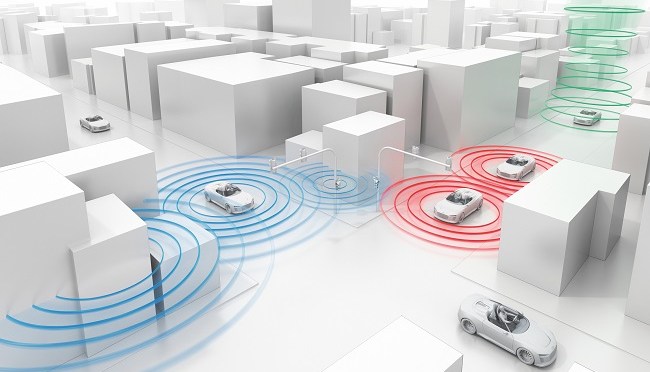
Currently, two projects are in progress, the Mobility Transformation Centre and theConnected Vehicle (CV) Pilots Deployment project. Both are spin-offs of the recently completed Connected Vehicle Safety Pilot programme carried out in Ann Arbor, Michigan, which tested the readiness of dedicated short-range communications (DSRC) in a connected vehicle for use in vehicle-to-vehicle (V2V) and vehicle-to-infrastructure (V2I), and involved approximately 2,800 cars, trucks and transit vehicles equipped with V2V systems.

Stepper explained that the Mobility Transformation Centre, which is hosted by the University of Michigan, is a “significant expansion” of the Safety Pilot project, including using 9,000 vehicles with V2V and V2X technology, using a far greater testing area and, eventually 20,000 vehicles at 500 nodes, such as traffic lights and intersections, and to broaden the scope of testing to include, for the first time, automated vehicles.

The testing will be carried out in several counties in south-eastern Michigan and will include equipping non-vehicle road users, such as pedestrians and cyclists, with DSRC devices. “They will be communicating with cars and the infrastructure by sending out signals that they are there,” Stepper said. “The target of this model is to avoid crashes or to mitigate the consequences of a collision, including those involving pedestrians and cyclists.”

“A similar model deployment for automated vehicles and this project will be carried out in and around Ann Arbor and involves 2,000 vehicles and some 27 square miles of densely instrumented infrastructure. We at Bosch are extremely excited by it.”

Source: www.automotiveitnews.org

V2X is HOT, finally!

Regardless of any critics concerns is being deployed in large scale tests. There is no other auto technology that can see around corners, so adds a lot of value to safety systems. A big opportunity for silicon suppliers, Renesas is already underway on a 2nd generation chipset that will appear in these tests. Now more OEMS and Tier1s are standing up to see the revenue coming.

Apple and Google Tempted by Cars That Can Buy Morning Coffee

“The transportation industry is ripe for disruption. Either we kind of drive that disruption and gain from the new business models that will emerge, or we let someone else do it.”
BMW, Volkswagen AG’s Audi and Daimler AG’s Mercedes-Benz compete head-to-head on everything from new models to passenger comforts. But the threat of an Apple car has helped prod them to make a joint bid to acquire Nokia Oyj’s HERE digital map business, which may fetch as much as $4 billion, people familiar with the matter have said.

Source: www.bloomberg.com

Do you really think not owning HERE is preventing the car industry from establishing digital payments with Starbucks? They’ve have about 15 years to get it going and have yet to see any kind of apps in cars, let along competing ones from the German 5. HERE is critical to their supply chain and legacy vehicles while Google Android and Apple move in with maps customers like. Meanwhile the car industry can work on adding value to them, such as the open W3C defined vehicle interface API and new UX creation that really streamlines smartphone integration.

Now for automated vehicles you will need good maps, and if HERE is the source, not Google, this would be a good deal. Let Apple scoop the coffee while making sure cars give people what they want, less crashes.