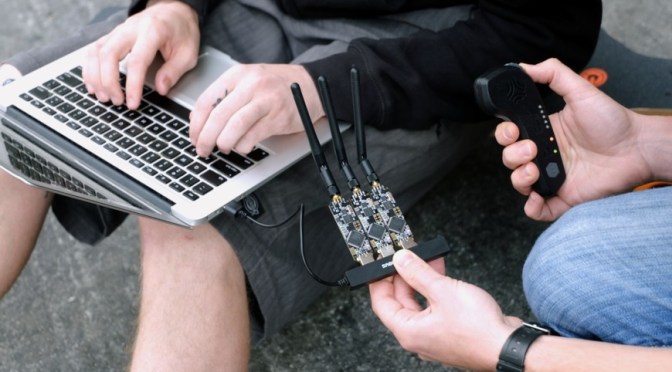
I never know they could go this fast, just 5 MPH behind a Google autocar. I guess the only good news about this hack is that the “driver” can jump off, like many skateboard folks do all the time.
I hope all this security exposing research comes up with a solution common to all “vehicles” including real ones.
Local plans to build its own cars, but it could also end up working as a supplier for original-equipment manufacturers, some of whom have met with Rogers already. “One of them said, ‘This would be great for prototyping,’ ” Rogers says. “And I said, ‘Forget prototyping! This is how you make the car.’ ”
The “paint job” is a bit bumpy, but not making prototypes could save millions for cars that get crashed in NHTSA testing anyway. They used to print newspapers in central plants and ship them around, but the news was old by the time it arrived. Now they print on-the-spot. Imagine your dealership printing your car while you wait. 😉
You think, how is the automobile industry going to supply that nondifferentiated demand?
“That is a scary proposition. That’s where you have to worry about people like Apple and Google, because 90 percent of the content of the vehicle is going to be in the electronic systems and the connectivity and, of course, the battery. The module itself is going to be relatively trivial.”
You can have any vehicle module color you want, as long as it’s black.
Bob Lutz is famous for his car design leadership, his old job will be trivial in the future, but he can’t predict the date. Given that cars tend to stay around 10-20 years and still run, it will be difficult to imagine the coexistent model.
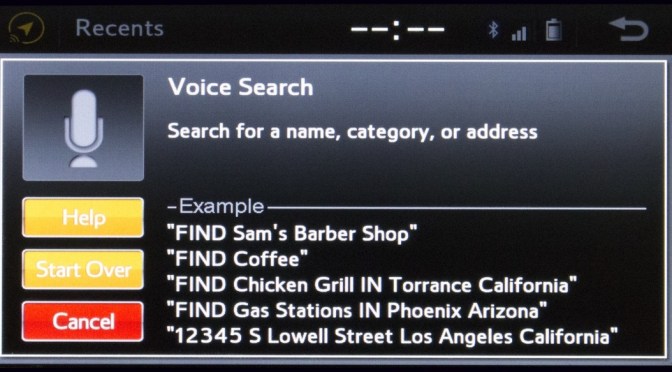
With this announcement is is clear that Toyota is making its best to keep away from Android Auto and CarPlay. It is also worth noticing that for the first time a leading auto maker is using data from Openstreetmap to power a turn-by-turn GPS navigation system.
This is pretty clear evidence that Toyota continues to favor open source models and software that allows them to maintain control of their customer relationship. Add this to the news around SDL also tied in with UI Evolution and you have some nice bookends around Linux in the future of the worlds largest automaker.
Until now, car hacking demos were done only while security researchers were hard-wired into a vehicle’s electrical system. There was just one documented real-world case of remote car hacking in 2010, but that was an inside job by a disgruntled car dealer employee, who bricked over 100 vehicles by taking advantage of technology designed to allow remote repossession. …
Doug Newcomb covers all the facts, except that the patch FCA could quickly devise just plugs a hole in the bucket. The offending messages that “drove” the Jeep demo are still a valid and necessary part of the “by-wire” cars we have today. According to Charlie Miller hackers just need to find a new way to access the message bus. The solution is to re-architect the car information backbone including CAN, but who will make the investment? Ethernet is just now showing up in cars, adding to the LIN, MOST, CAN, Flexray, VAN and a dozen other protocols we need to secure more. The PC and data center industry had this problem 20 years ago while Cisco made millions selling “Multi-Protocol Routers”. Then we settled on TCP/IP and the internet took off roaring. When will the auto industry realize that collaboration results in growth and closed designs result in losses.
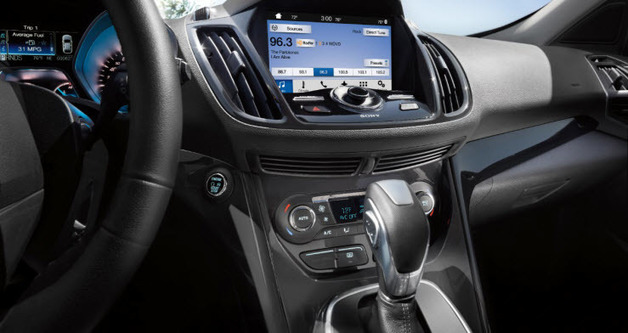
We keep hearing that cars are becoming smartphones on wheels. But most automotive infotainment systems don’t yet have the range of apps and effortless updatability associated with portable devices. And that there’s no single standard for smartphone integration currently on the market makes in-vehicle connectivity confusing for consumers, while automotive infotainment interfaces are among car …
Cars are much more than smartphones on wheels, but smartphones capture the attention of the next generation of buyers more than typical car features. It’s very interesting to see 2 very large OEMs teaming up to make phones and cars come together better.
FCA may be the first OEM to issue a cyber security-related recall, but it will not be the last.
Should cyber security be something that OEMs work on in isolation, with each developing its own solutions? The silo approach certainly has its benefits, preventing hackers from making a single attack on thousands or millions of vehicles across multiple brands all at once; but it also means a duplication of R&D for the same result. Identifying threats is crucial, which is where some kind of cyber security social network would come in handy; AlienVault spoke to Automotive World about its Open Threat Exchange (OTX), where OEMs, suppliers and other interested parties can collaborate in confidence.
I think collaboration makes a lot of sense when it comes to huge solutions needed to problems affecting nearly all people, like safety and cybersecurity.
“You’re determined. So what? You haven’t been racing naked through shark-infested waters yet,” she writes. “Will you be just as determined when you wash up on some deserted island, disoriented and bloody and ragged and beaten and staring into the horizon with no sign of rescue?”
“We are leaders in this technology and will stand up for ourselves,” Bernhard said, acknowledging that Apple, Google and other companies were trying to position themselves in the promising business of autonomous driving.
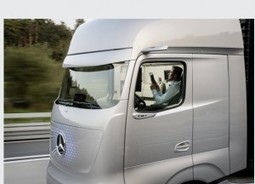
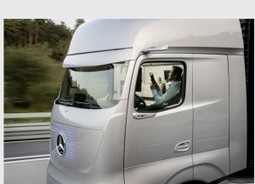
I really like the picture of the “trucker” reading his mail on an iPad. I assume safety advantages, not cost reduction is expected since there will be a “driver” in the loop. Breaker / breaker one-niner, 10-4.
Chevrolet, Buick, GMC and Cadillac will offer 22 different active safety technologies across their 2016 model year U.S. lineups, ranging from driver alerts to those that automatically intervene and…
Great to see that GM is investing further into V2X besides adding DSRC radios into Cadillacs beginning 2016. There is a lot more to safety than wireless radios that needs to be developed, and of course this tech needs to be on all cars, not just luxury models. Costs must go down to make that happen – collaboration is one key element to exploit.











 Hoffmann Group Consulting, LLC