All posts by Joel Hoffmann

www.linkedin.com/in/joelhoffmann

US government gets in gear by ‘investing’ in connected cars

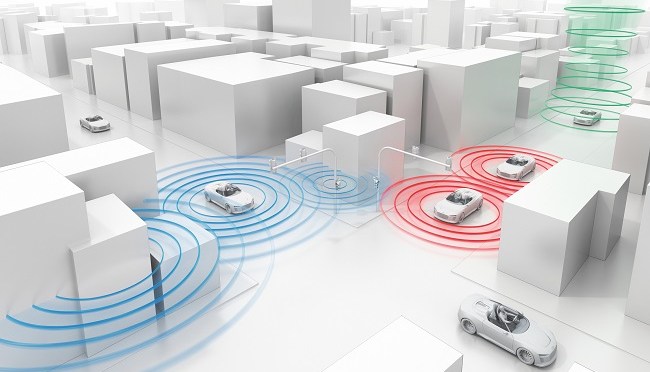
Currently, two projects are in progress, the Mobility Transformation Centre and theConnected Vehicle (CV) Pilots Deployment project. Both are spin-offs of the recently completed Connected Vehicle Safety Pilot programme carried out in Ann Arbor, Michigan, which tested the readiness of dedicated short-range communications (DSRC) in a connected vehicle for use in vehicle-to-vehicle (V2V) and vehicle-to-infrastructure (V2I), and involved approximately 2,800 cars, trucks and transit vehicles equipped with V2V systems.

Stepper explained that the Mobility Transformation Centre, which is hosted by the University of Michigan, is a “significant expansion” of the Safety Pilot project, including using 9,000 vehicles with V2V and V2X technology, using a far greater testing area and, eventually 20,000 vehicles at 500 nodes, such as traffic lights and intersections, and to broaden the scope of testing to include, for the first time, automated vehicles.

The testing will be carried out in several counties in south-eastern Michigan and will include equipping non-vehicle road users, such as pedestrians and cyclists, with DSRC devices. “They will be communicating with cars and the infrastructure by sending out signals that they are there,” Stepper said. “The target of this model is to avoid crashes or to mitigate the consequences of a collision, including those involving pedestrians and cyclists.”

“A similar model deployment for automated vehicles and this project will be carried out in and around Ann Arbor and involves 2,000 vehicles and some 27 square miles of densely instrumented infrastructure. We at Bosch are extremely excited by it.”

Source: www.automotiveitnews.org

V2X is HOT, finally!

Regardless of any critics concerns is being deployed in large scale tests. There is no other auto technology that can see around corners, so adds a lot of value to safety systems. A big opportunity for silicon suppliers, Renesas is already underway on a 2nd generation chipset that will appear in these tests. Now more OEMS and Tier1s are standing up to see the revenue coming.

Apple and Google Tempted by Cars That Can Buy Morning Coffee

“The transportation industry is ripe for disruption. Either we kind of drive that disruption and gain from the new business models that will emerge, or we let someone else do it.”
BMW, Volkswagen AG’s Audi and Daimler AG’s Mercedes-Benz compete head-to-head on everything from new models to passenger comforts. But the threat of an Apple car has helped prod them to make a joint bid to acquire Nokia Oyj’s HERE digital map business, which may fetch as much as $4 billion, people familiar with the matter have said.

Source: www.bloomberg.com

Do you really think not owning HERE is preventing the car industry from establishing digital payments with Starbucks? They’ve have about 15 years to get it going and have yet to see any kind of apps in cars, let along competing ones from the German 5. HERE is critical to their supply chain and legacy vehicles while Google Android and Apple move in with maps customers like. Meanwhile the car industry can work on adding value to them, such as the open W3C defined vehicle interface API and new UX creation that really streamlines smartphone integration.

Now for automated vehicles you will need good maps, and if HERE is the source, not Google, this would be a good deal. Let Apple scoop the coffee while making sure cars give people what they want, less crashes.

Apple, Will You Drive My Car?

Promoted as a “smarter, safer way to use your iPhone in the car,” CarPlay allows your iPhone to handle much of the digital controls.

There’s no argument that a phone offers numerous benefits in a car, fron navigation and real time traffic updates to information about a last minute change of plans. But I doubt many people think actually using a phone while driving is safe.

Source: www.cmswire.com

The WWDC apparently revealed that CarPlay will support wireless in the car, a great convenience although we all know how quickly the phone battery runs down when using navigation. Most will plug in anyway.

Report: Jaguar-Land Rover don’t believe in autonomous cars

One of the future prospects for the automobile industry is the recent push for autonomous driving technology, which is obviously causing quite the buzz. But in the point of view and perspective of Jaguar-Land Rover’s R&D chief, Wolfgang Epple, J-LR doesn’t approve of autonomous driving technology because they don’t consider the occupants inside the car, “cargo.” “We don’t want to build a robot that delivers the cargo from A to B,” said Epple, who’s most likely referring to the connection between

Source: www.automotiveitnews.org

In this case the “connected car” is connected to the driver, and not the internet. Autonomous cars will face stiff competition from owners that enjoy driving, and cars that enable you to do that.

GENIVI Alliance: Carmakers support “always connected” consumers

“As a first solution, some carmakers tried specific integrations (one smartphone to one car system). But since then, several technologies have been developed to better standardize smartphone integration, including:

  1. MirrorLink, a standard proposed by Car Connectivity Consortiu
  2. SmartDeviceLink, an open-source project initiated by Ford and hosted by the GENIVI Alliance
  3. CarPlay, an integration specifically for iPhones and introduced by Apple in 2013
  4. Android Auto, an integration specifically for Android devices introduced by Google in 2014

Carmakers do not want to leave any of their customers unhappy, and therefore tend to support a full set of solutions in their in-vehicle portfolio. Developing this set of integration solutions and maintaining them for the long haul is painful, costly, and always risky for customer satisfaction. Whose fault is it when the app doesn’t work? Automakers will avoid this pain if they can benefit from a set of standardized interfaces that simplify integration with their in-vehicle software platform.”

Source: embedded-computing.com

GENIVI is in a good spot to be neutral about these technologies, but I’m confident a list of 4 solutions will eventually be 2 with an alternate. Can you guess which will have the most glimmer to consumers? What about the OEMs? The key value is to be adaptable to the changing consumer demand, and open source provides the way to do that. Selling cars is what matters to everyone.

Rebooting the Automobile

“Every few months, Tesla owners receive a software update that adds new functions to their vehicle. Since the Model S was released, these have included more detailed maps, better acceleration, a hill-start mode that stops the car from rolling backwards, and a blind-spot warning (providing a car has the right sensors). Tesla’s CEO, Elon Musk, has said a software patch released this summer would add automated highway driving to suitably equipped models.

These software updates can do more than just add new bells and whistles. Toward the end of 2013, the company faced a safety scare when several Model S cars caught fire after running over debris that ruptured their battery packs. Tesla engineers believed the fires to be rare events, and they knew of a simple fix, but it meant raising the suspension on every Model S on the road. Instead of requiring owners to bring their cars to a mechanic, Tesla released a patch over the airwaves that adjusted the suspension to keep the Model S elevated at higher speeds, greatly reducing the chance of further accidents.”

Source: www.automotiveitnews.org

I find it interesting that Tesla’s Operating System, called Tesla OS, is a custom brewed version of Linux and they are also the first to have useful OTA capabilities in market. Soon the rest of the industry players can catch up using some interesting software under development in the open community. What will Tesla be doing by then?  Autonomous Driving?

106 Years After the First Airline Formed, a Company Has Finally Made the Middle Seat Halfway-Pleasant

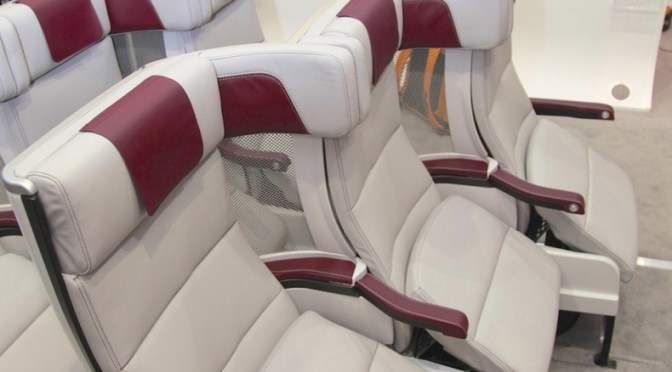
If Thompson Aero Seating has its way, the days of cramming into the middle seat, engaging in the passive-aggressive skirmish for the armrests, will be long gone. The Northern Ireland seating manufacturer has transformed the infamous center seat into the prime place to park yourself for the duration of your flight, thanks to its staggered Cozy Suite design.

Source: www.travelandleisure.com

I suppose it’ll take another 106 years to get these in all the planes. 

5 Ways to Be a Stand-Out Employee While Working Remotely

Working remotely is a dream come true, if you understand a few tricks of the trade. Here are five ways to ensure that your work-from-home situation is a success and not a dud.

Source: www.payscale.com

I like the comments about setting up your remote workspace to be hyper-productive. It’s not really much harder to work hard at producing, and much more satisfying than constant interruptions at the office. Why do you think colleagues tend to line up meetings in conference rooms all day, to avoid some of the chatter and take a mental nap?

USAGE-BASED INSURANCE – IS IT A BUBBLE?

There is a consensus in the market that despite all promises and forecasts, UBI has not become mainstream, and it is still in its infancy. Therefore, it is about the right time to stop the race for a moment and examine whether insurance telematics is going to be a success story, or is rather a bubble.About a month ago, in May 2015, the British Insurance Brokers Association (BIBA) released a research, showing the figures of UBI in the UK. The research showed that the number of live UBI policies i

Source: www.linkedin.com

I like the approach suggested, and believe one of the issues is the single data source and provider model. Imagine the internet where you decided what website to go to, and they provided the connection and service. Not much value in the long run. What is needed is a truly open connection when aggregators and service providers can compete to obtain your data (in exchange for something you want) and offer it to multiple payers. Also, all the cars need to use the same system for connectivity and communication – an open model. There are plenty of technical solutions to this and if the UBI providers will take a long term approach, they can conclude there is no profit in being a closed architecture.